
Isolated applications
Separate applications, each with its own connection.
- Separate customer context
- Repeated integrations
- Fragmented workflows
- Multiple administration layers
Platform
Liberrex connects customer-facing operations across branches, agencies, service points and digital channels through a shared data, orchestration and integration foundation.

Why platform architecture matters
Isolated applications
Separate applications, each with its own connection.
Liberrex Platform
Shared foundation
Four product families on one shared foundation.
Operating model
01
02
03
04
05
Measurement → Signals / Context
Product families
01
Manage how customers enter, move through and interact with your service network.
02
Translate commercial priorities into objectives, campaigns and frontline execution.
03
Understand, decide and engage each customer from a shared context.
04
Assist customers and teams with conversational, voice and agentic AI capabilities.
Shared foundation
Shared foundation
Shared structures for customers, users, locations, products and interactions.
Connect existing enterprise systems through APIs and integration patterns supported by each deployment.
Coordinate rules, workflows, campaigns and operational actions.
Connect supported platform capabilities to existing enterprise systems.
Roles, permissions, organizational structures and access control.
Enterprise foundation
01
Connect Liberrex with the existing operating environment.
02
Run the platform across distributed networks.
03
Manage access, rules and governance.
Industries
Head Office · Region · Branch · Advisor
Explore bankingHead Office · Regional Network · Agency · Agent
Explore insuranceHead Office · Region · Store / Dealer · Agent
Explore telecommunicationsCentral Administration · Regional Entity · Service Point
Explore public sectorOrganization · Facility · Department · Staff
Explore healthcareCustomer proof
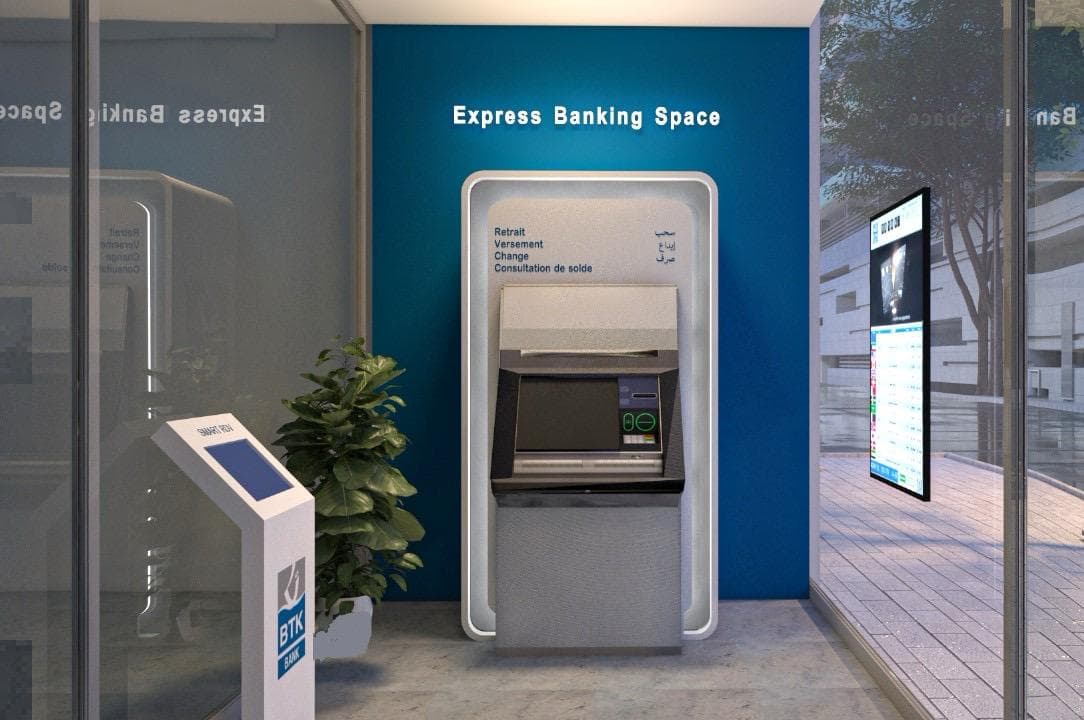

BTK Bank
Banking
BTK coordinates appointments, queues and feedback on the branch floor.


BIAT
Banking
BIAT runs appointments, customer flow and feedback across agencies.
FAQ
Liberrex is one enterprise software platform for customer-facing operations across distributed networks. It connects Customer Experience, Workforce Experience, Customer Intelligence & Engagement and AI & Agents on a shared foundation for data, integrations, orchestration, APIs and administration. Organizations use it to run branches, agencies, service points and digital channels without treating each product as a separate application.
The four product families solve distinct operating problems while sharing the same platform foundation. Customer interactions, network structure, users and operational context can inform workforce execution, intelligence and AI workflows instead of being rebuilt in each application. Teams can work from connected context while using the product family that matches their job.
Yes. Organizations can start with the product family that matches the current operating need and expand later. The shared foundation is designed so additional families can be added without rebuilding the architecture. Scope is confirmed during engagement based on the network, systems and use cases.
Liberrex is designed to connect with existing enterprise systems through APIs and integration mechanisms supported by each deployment. Depending on the project, this may include customer, operational, CRM, core-business or communication data sources. Integration scope depends on the systems and interfaces available in the organization.
No. Liberrex is not a core banking, core insurance or CRM replacement. It is designed to sit alongside existing enterprise systems and connect customer-facing operations, frontline execution, intelligence and AI to those systems where interfaces are available.
Liberrex is designed for distributed customer-facing networks rather than a single-site tool. Hierarchies such as head office → region → branch, agency, store or service point can be modeled to the organization’s operating structure. The same platform is used across banking, insurance, telecom, public-service and healthcare networks, with labels and workflows adapted to each model.
Connect customer journeys, frontline execution, intelligence and AI across your operating model.