
AI & Agents · Voice AI
Automate telephone conversations with intelligent voice agents.
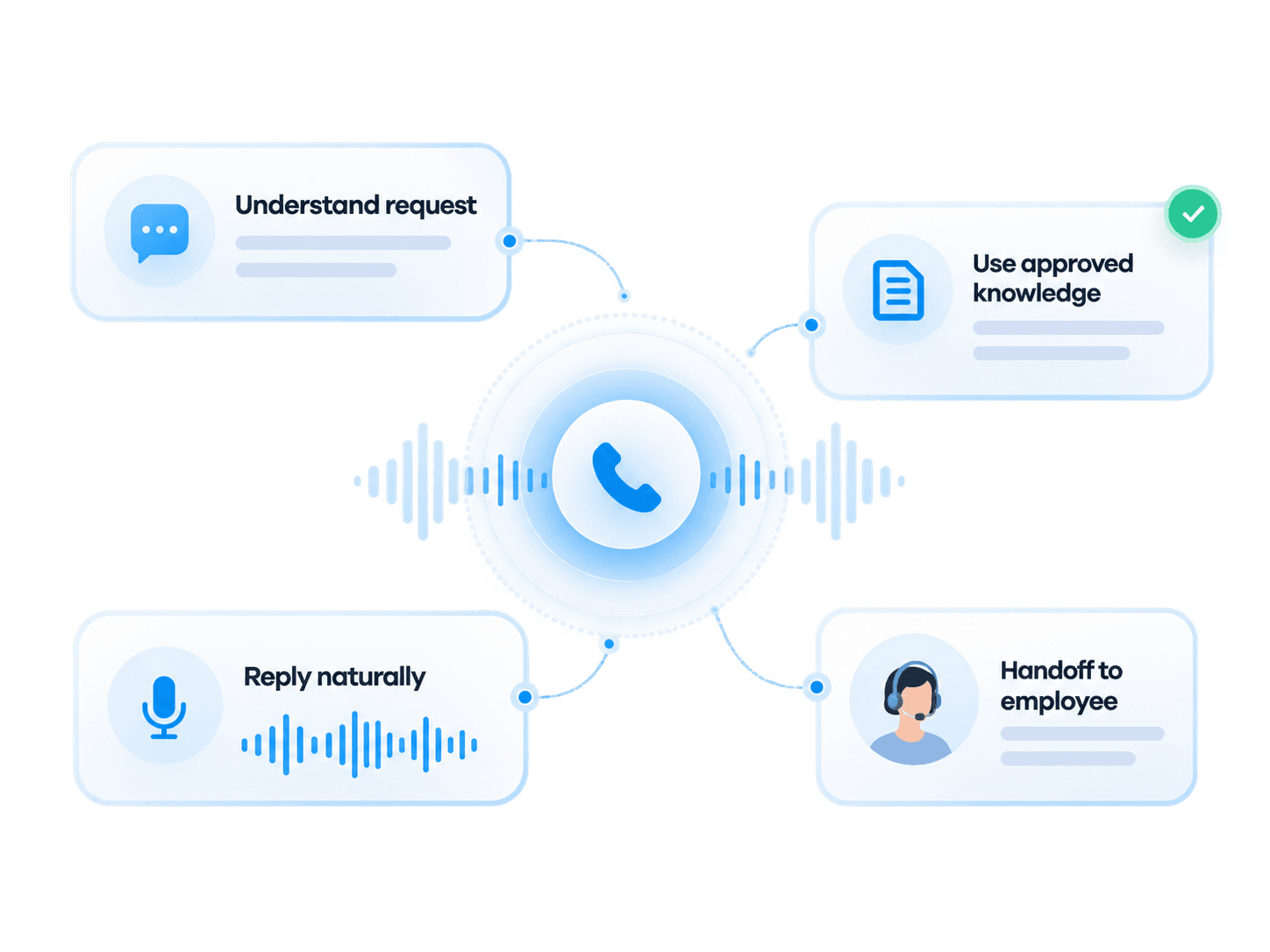
Liberrex Voice AI automates the telephone interactions the customer starts. The voice agent understands the request, uses approved knowledge, replies by voice and can transfer the call with its context.
Depending on the scenario, it explains, asks again for missing information, runs the allowed action or passes the call to an employee.
Voice pipeline
Turn speech into a conversation the business can use.
- 01
Listen
Turn the spoken request into context the agent can use.
- 02
Understand
Identify what the caller wants.
- 03
Reason
Use approved knowledge, allowed data and the rules of the scenario.
- 04
Reply
Give the appropriate spoken answer.
- 05
Act
Run a configured action, or transfer the call.
Insurance
A voice agent suited to insurance calls.
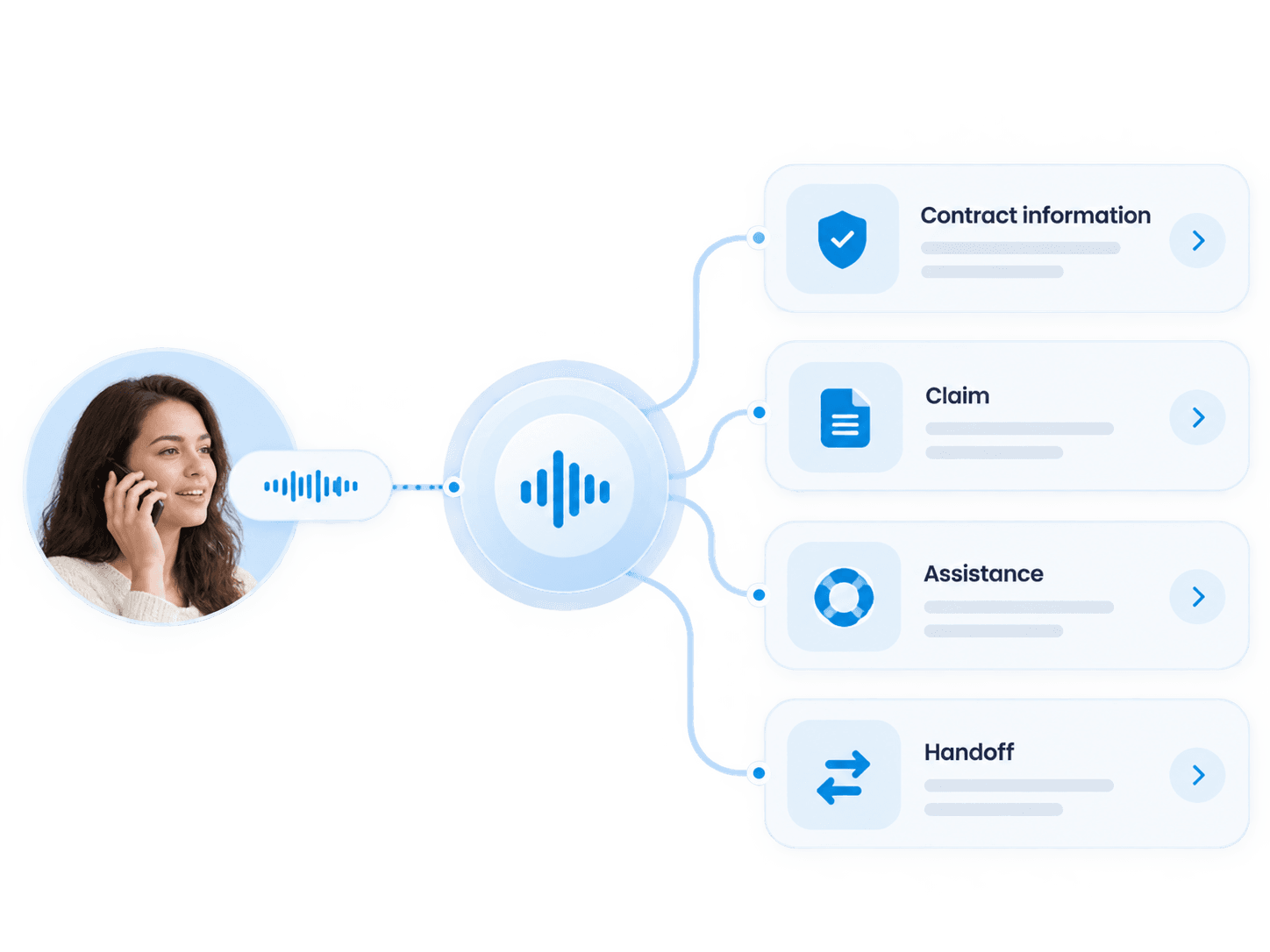
“I want to know whether this guarantee covers my claim.” The voice agent retrieves the approved information, asks the missing question, runs the allowed action or transfers the call with the reason.
Information, a missing question, an allowed action or a transfer.
Contract information
Explain a guarantee or a procedure from approved sources.
Claim
Collect the reason for the call, or share a status when the case system is connected.
Assistance
Guide the policyholder through the useful next step.
Handoff
Transfer a complex call with the reason and the context already established.
Voice-specific
A conversation designed for voice.
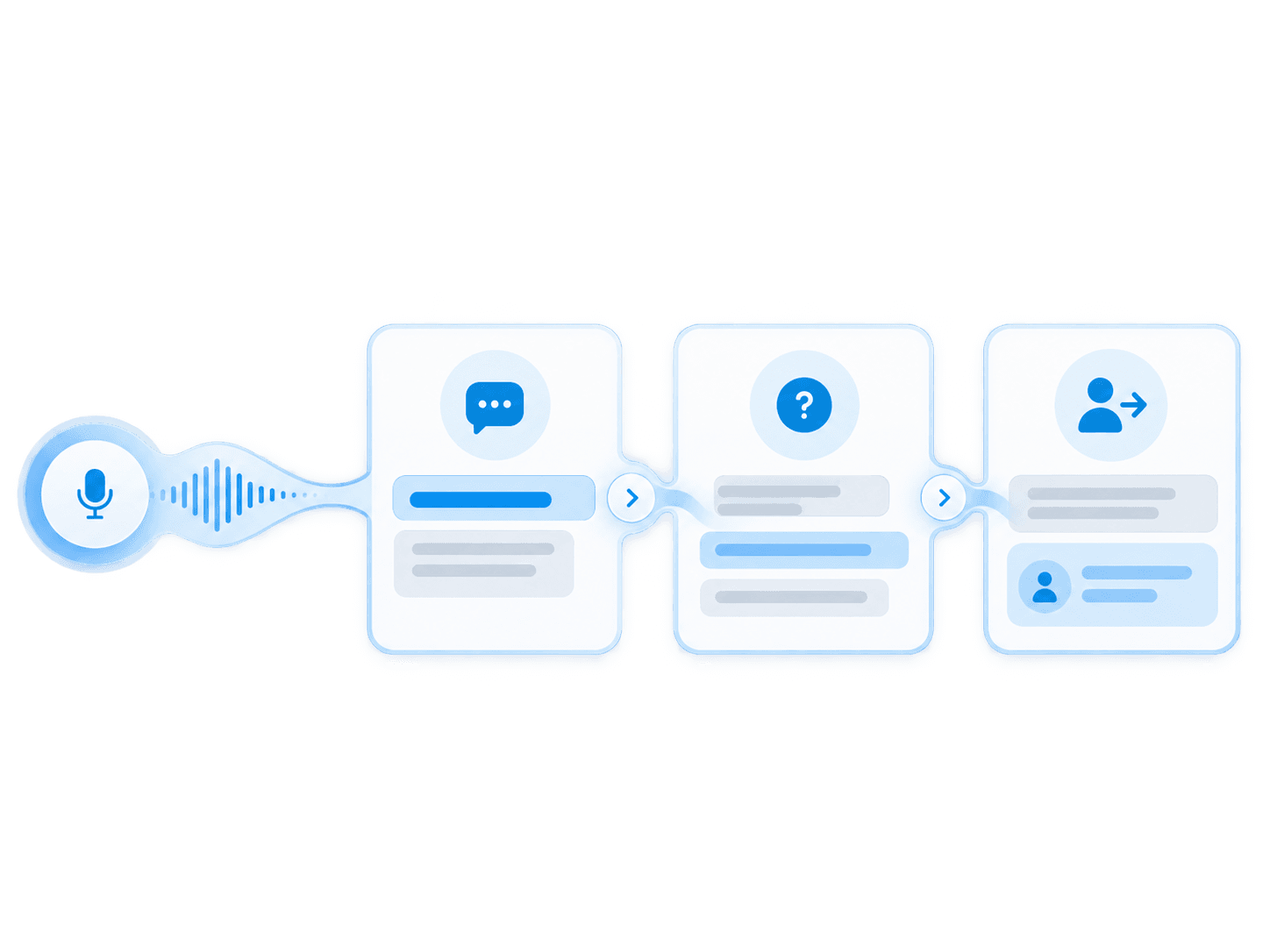
The exchange is spoken. The voice agent replies, asks again when something was unclear, then passes the reason and the information already collected if an employee should continue.
Spoken reply
Answer by voice from approved knowledge.
Clarification
Ask again for information that is missing or unclear.
Transfer
Pass the call to an employee with the reason and the context already established.
Impact
Handle more calls, and pass on those that need a person.
Automate repetitive calls
Handle recurring requests by voice, from approved information.
Extend availability
Answer the call the customer starts, including before a person is the first step.
Resolve sooner
Explain, run the allowed action, or route the call with its context.
Keep human escalation
A complex call goes to a colleague without a restart.
AI & Agents
Connected to the rest of AI & Agents
FAQ
Questions about Voice AI
What is a Liberrex voice agent?
It handles a telephone conversation: it understands the spoken request, uses approved knowledge, replies by voice, and can run a configured action or transfer the call.
How is this different from an IVR?
The caller can state the request in their own words. The agent uses approved knowledge and the scenario, instead of a rigid menu of keys.
Can Liberrex handle interruptions?
The voice agent asks again for information that is missing or unclear, then picks up the thread of the call.
Can it access business data?
Yes, when the scenario is allowed to read a connected system, for example the status of a case. Coverage explanations come from approved documents.
Can it take an action during the call?
Yes, when that action is part of the scenario. Otherwise it answers or transfers the call.
Can it transfer the call to an advisor?
Yes. The advisor receives the reason for the call and the context already established.
Is the context passed to the advisor?
Yes. The handoff carries the reason and what the caller has already provided.
Can it place outbound calls?
The voice agent handles the call the customer starts: it understands the request, replies, acts when the scenario allows it, and passes on the context.
How are calls transcribed and analyzed?
The voice agent uses the call to answer or to hand it over. Reading contact reasons across many interactions happens in Conversation Intelligence.
See how Liberrex can automate your voice interactions.
Configure what the voice agent can explain, which action the scenario allows, and when a person should take the call.