
Customer Intelligence & Engagement · Marketing Automation
Automate campaigns and journeys from the right signals.
Create journeys triggered by customer data, behavior and events, then orchestrate marketing actions over time.
Connect audiences, triggers, conditions and goals in one orchestration environment.
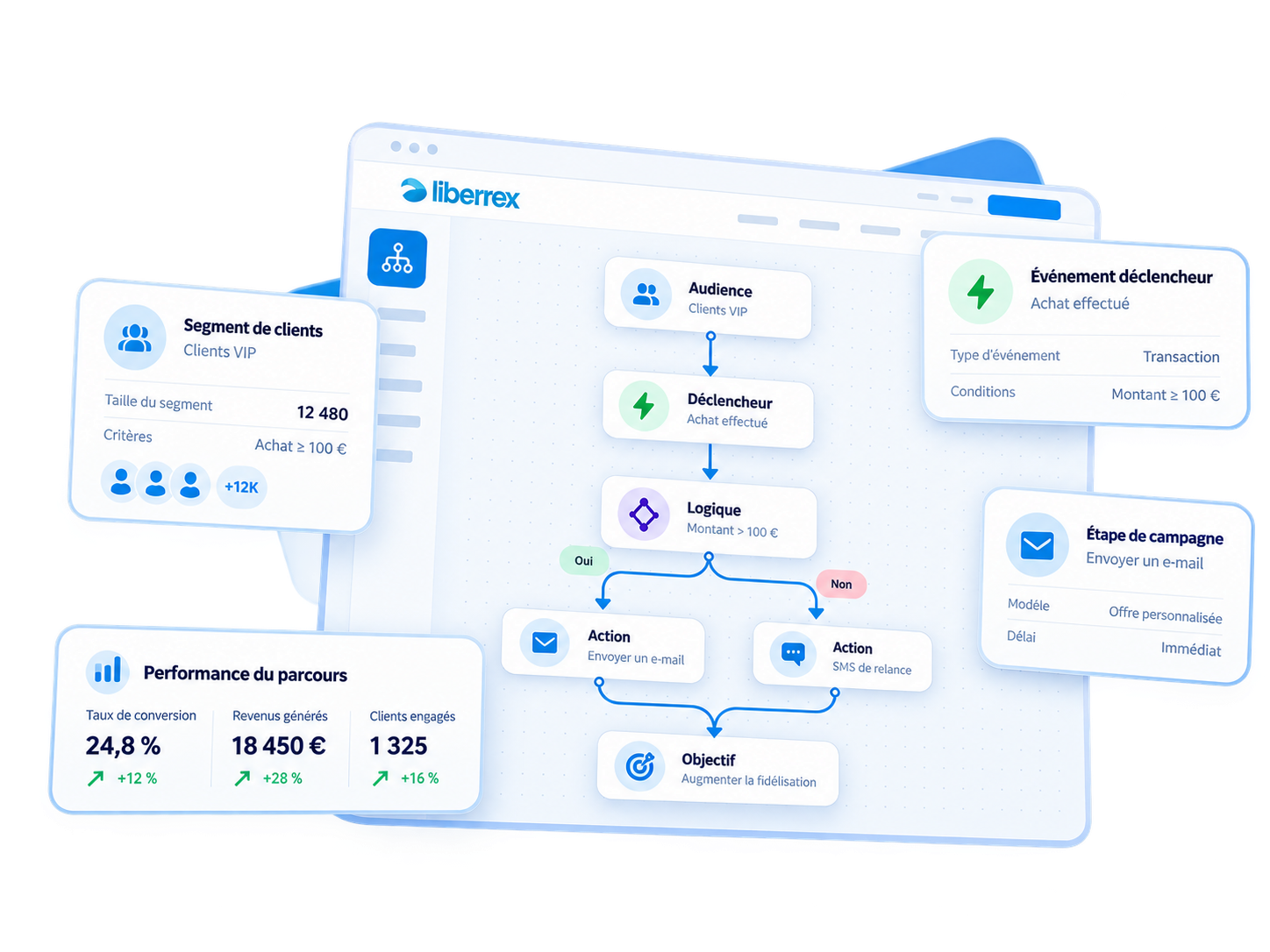
Automation model
Build journeys that respond to customer context.
A journey links who enters, what starts it, the logic that steers the next step, the action and the goal.
- 01
Audience
Who can enter the journey?
- 02
Trigger
What starts or advances the journey?
- 03
Logic
Which conditions determine the next step?
- 04
Action
What should the system do?
- 05
Goal
Which result or event marks progress or exit?
Journey Builder
Build journeys visually.
Compose journey steps from audiences, triggers, conditions and actions, without losing the overall logic of the automation.
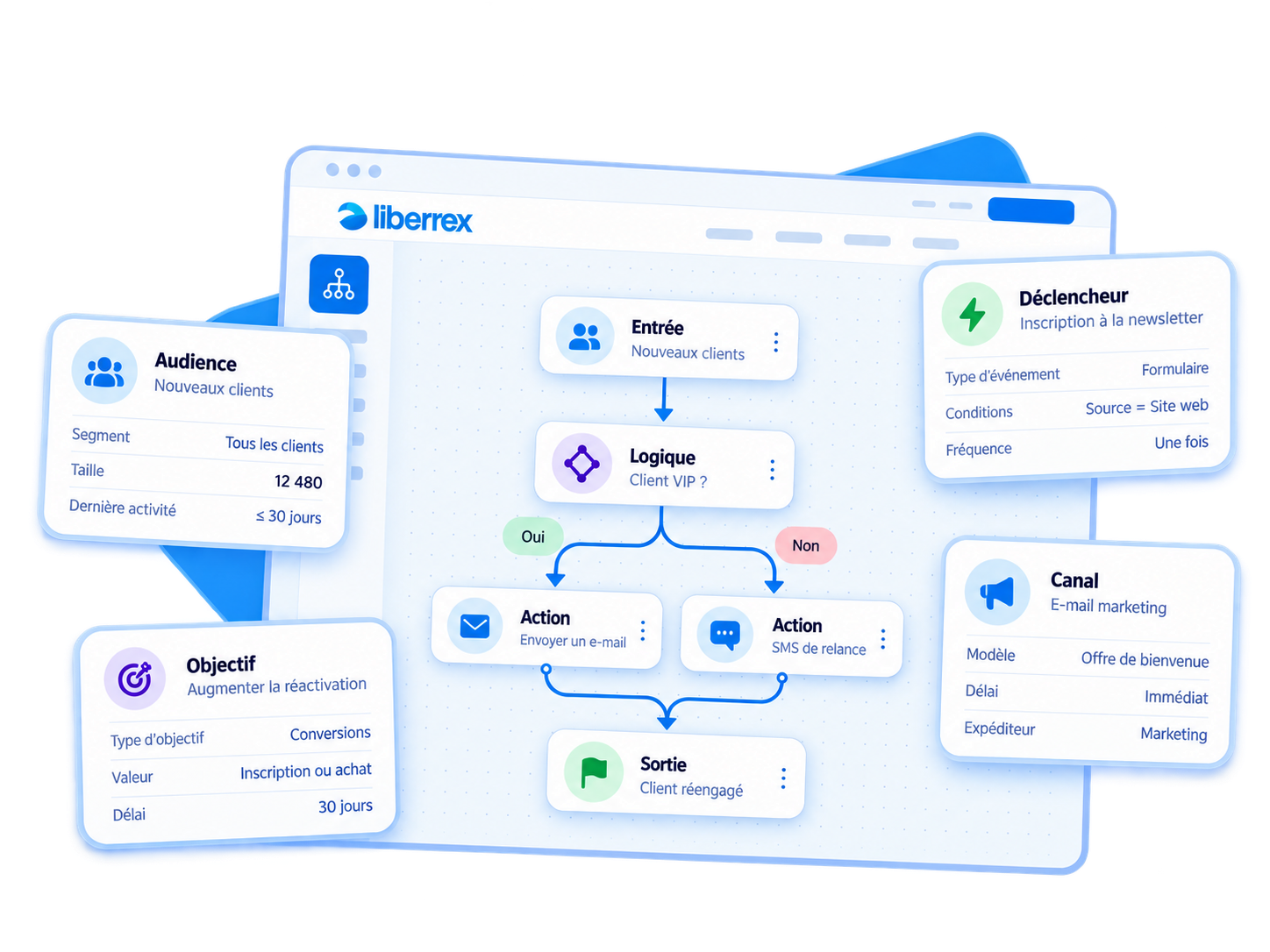
Entry
Who starts the journey, and from which signal.
AudienceEventData change
Logic
What determines the next step.
Conditions
Action
What the step is defined to trigger.
Planned action
Exit
What marks progress or the end of the journey.
Goal
Audiences & triggers
Bring the right customer in at the right moment.
Entry depends on the audience and on what has changed for the customer.
Audiences
Use a segment or customer criteria to decide who can enter.
Events
Respond when a meaningful customer activity occurs.
Data changes
React when a relevant customer attribute changes.
Journey logic
Adapt the journey to the customer context.
Configured conditions steer the next step, so two customers can follow different paths.
Segment
Membership in an audience can open a step.
Profile
A known customer criterion can steer what follows.
Event
An activity that already happened can change the next step.
Actions & campaigns
Trigger the planned action at the right moment.
A journey step activates the action defined for that moment.
Campaign
A coordinated marketing initiative for a defined audience.
Journey
A multi-step sequence that evolves with customer context and events.
The step runs the marketing action defined for that moment, on the channel configured for the organization.
Personalization
Adapt each interaction to the context available.
The action can draw on the profile, the segment and the journey stage when that context is available.
Intelligence identifies the context and the opportunities. Marketing Automation uses those signals to trigger and adapt journeys.
Profile
What is already known about the customer.
Segment
The audience the customer belongs to.
Journey stage
The moment the customer has reached.
Measurement
See what happens inside each journey.
The journey shows who enters, how the steps advance, and whether the goal is reached.
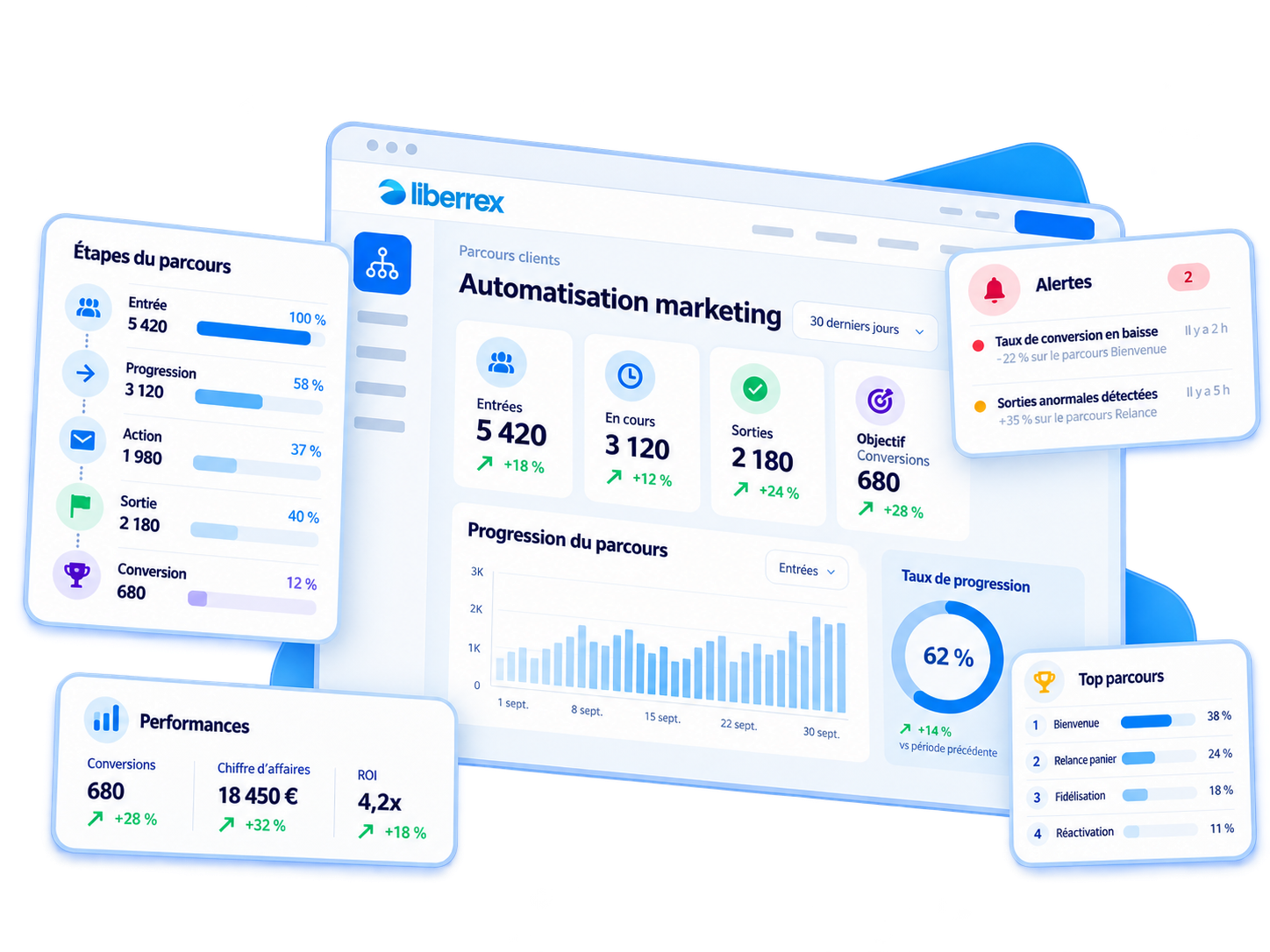
Entries
Customers who join the journey.
Progression
Movement from one step to the next.
Exits
Customers who leave the journey.
Goal
The result that marks completion.
Orchestration connected to the rest of Liberrex.
Customer & Sales Intelligence
Provides audiences, signals and recommendations.
Customer Engagement
Defines the relevant interaction to deliver.
Customer Experience
Runs service journeys and operations.
Use cases
Journeys for the customer lifecycle.
These situations fit a bank, an insurer, a telecom operator or a digital financial service.
Onboarding
Support a new customer after subscription or activation.
Activation
Encourage the first use of a service or a feature.
Re-engagement
Reach a customer who has become inactive, from defined signals.
Retention
Start a journey when a signal of disengagement appears.
Questions
Questions about Marketing Automation
What is Liberrex Marketing Automation?
Marketing Automation builds and runs campaigns and customer journeys from data, behavior and events. An audience defines who can enter. A trigger starts the journey. Conditions steer the next step, an action is planned at each step, and a goal marks progress or exit. Orchestrating those steps belongs to Marketing Automation.
How does an automated journey work?
A journey starts when a customer matches the audience and a trigger occurs. Conditions read the available context, then the next step runs the action defined for that moment. The goal states what advances the customer or what closes the journey. The steps in use are the ones configured for the organization.
Which events can trigger a journey?
A journey can start from customer behavior, a meaningful event, or a change in customer data. The trigger brings the customer in or moves them to another step. It uses the signal that has been defined for that journey.
Can a segment be used as an entry audience?
Yes. A segment or a set of customer criteria can be the entry audience. The journey then addresses customers who share that criterion. The segment decides who can enter. The trigger is what actually starts the journey.
Can a journey include conditions or branches?
Yes. Configured conditions determine the next step. They can use the segment, a profile criterion or an event that has already occurred. Two customers in the same journey can therefore follow different paths when their context differs.
Which actions can a journey trigger?
Each step activates the marketing action defined for that moment. That action uses the channel configured for the organization. The journey describes the action to take from the customer context.
What is the difference between Marketing Automation and Customer Engagement?
Marketing Automation builds the workflow: audiences, triggers, journeys and campaigns. Customer Engagement defines the interaction that fits this moment in the relationship. Customer Experience remains the service journey, such as a queue or an appointment.
How do you see what a journey is doing?
The journey shows entries, movement from one step to the next, exits, and whether the goal is reached. Those markers describe progression through the journey that was configured.
Can Customer & Sales Intelligence feed a journey?
Customer & Sales Intelligence identifies context, segments and signals. Marketing Automation can use those elements as an entry or as a condition, when they are part of the configured journey. Intelligence sets the context. Automation places it into the sequence.
See how Liberrex can automate journeys from the right customer signals.
Connect audiences, triggers, conditions and goals so the action is orchestrated over time.