
AI & Agents · Conversation Intelligence
Turn every conversation into usable information.
Conversation analysis reads voice and digital exchanges to understand contact reasons, recurring themes and the signals useful to the service.
One interaction explains an exchange. The set of interactions explains what repeats.

Reading
From one exchange to a reading of the whole.
- 01
Conversation
The voice or digital exchange.
- 02
Content
Make the exchange readable so the reason and the theme can be drawn from it.
- 03
Reason and theme
Why the customer gets in touch, and what they are talking about.
- 04
Signals
Notice a repeated question, friction or an escalation.
- 05
Overall reading
Group those signals to see what repeats.
One interaction
See the reason inside the exchange.
An insurance call about a claim is read for the reason, the subject and how it ended: answered in the scenario, or transferred.
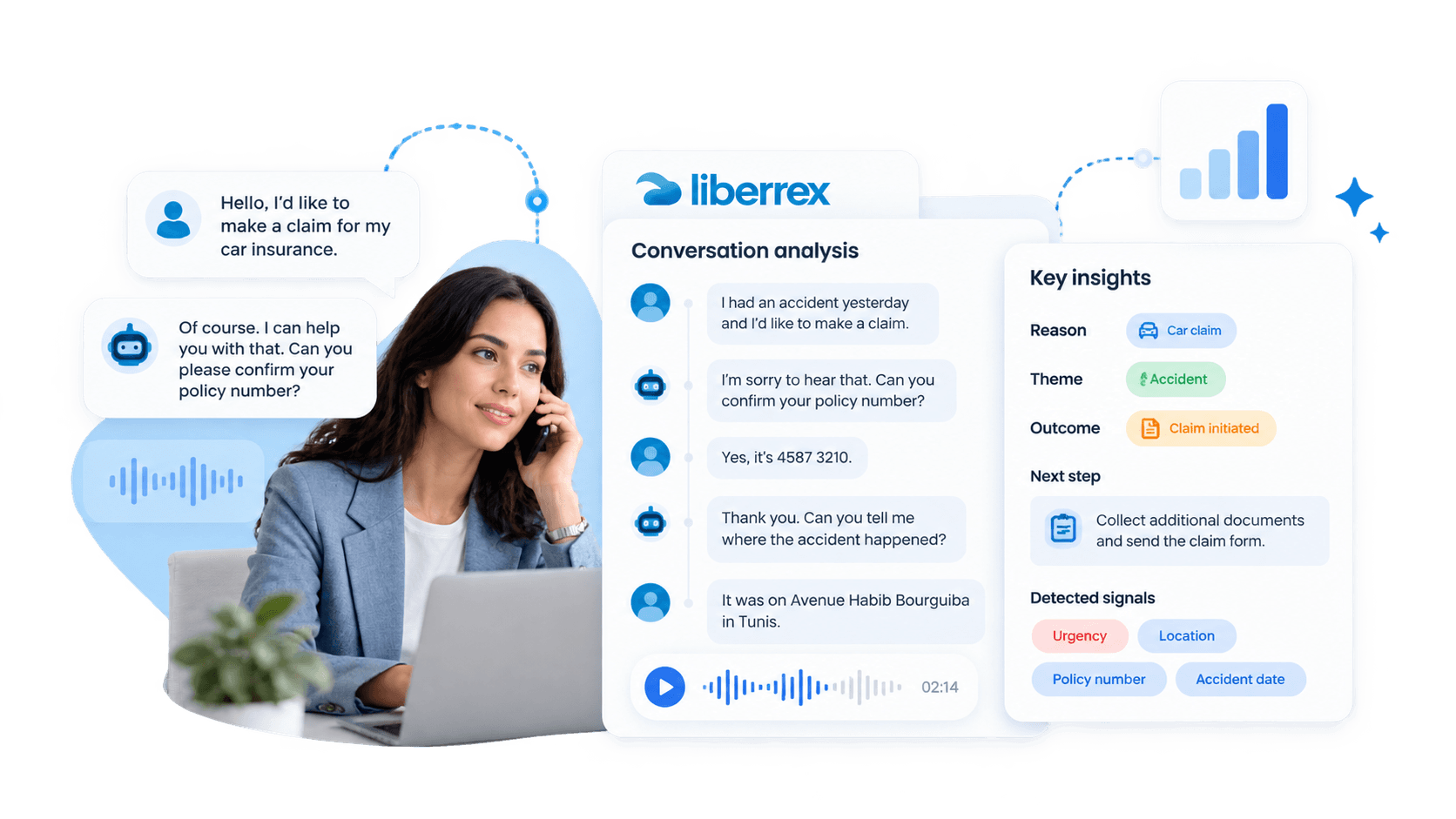
Reason
Why the policyholder called: assistance, coverage or a claim.
Theme
The specific subject handled in this exchange.
Outcome
Answered in the scenario, or transferred to a person.
Across interactions
Move from one call to a reading of the whole.
Why do customers get in touch? Which questions return? Where do exchanges escalate? Which knowledge is missing?
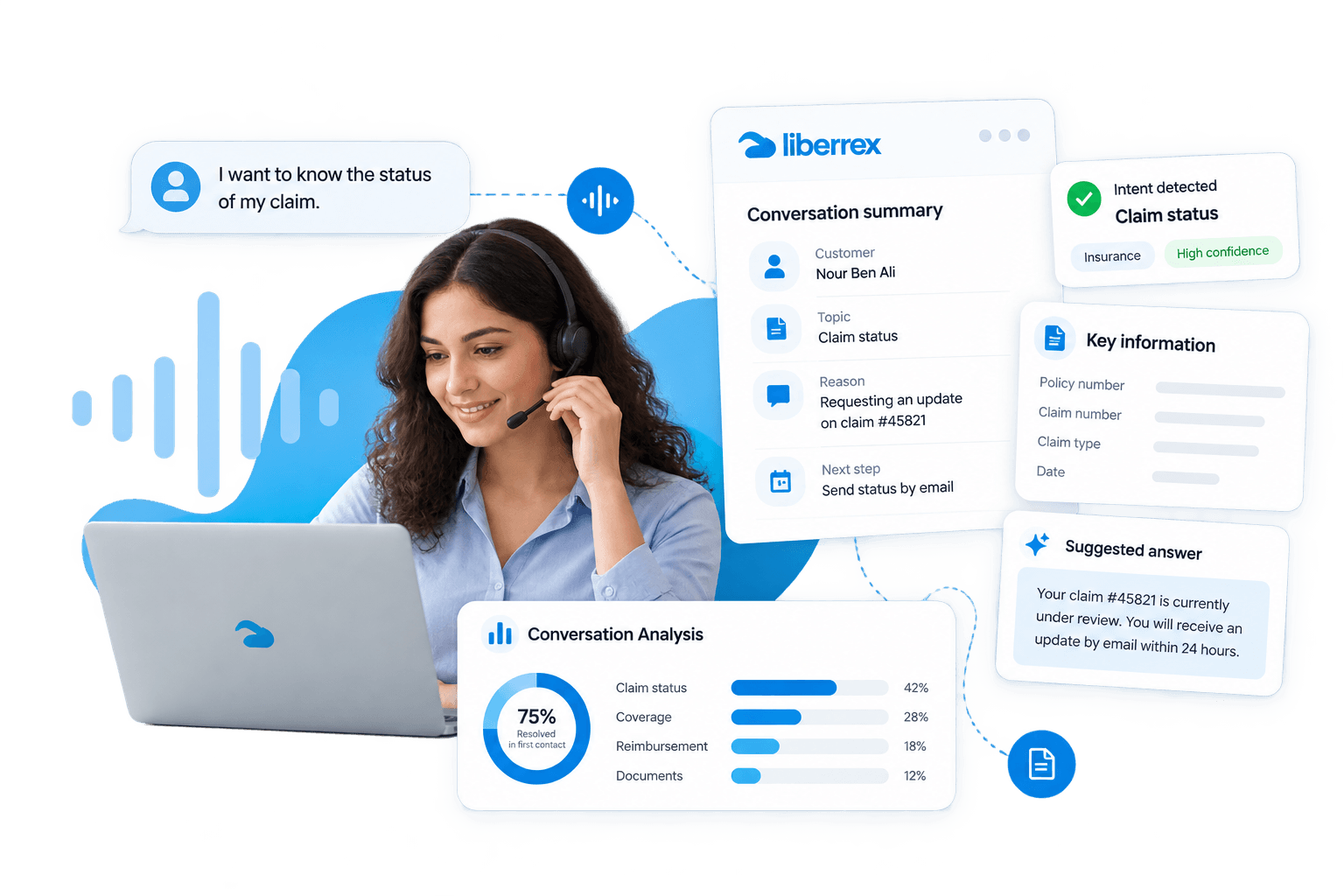
Most frequent reasons
The contact reasons that dominate the volume.
Recurring questions
Requests that return from one exchange to the next.
Escalation causes
Situations that go to a person.
Knowledge gaps
Questions the approved content does not yet settle.
Insurance
Read claim and assistance conversations as a set.
Call reasons
What policyholders ask about most.
Recurring questions
The points that come back from one call to the next.
Procedure friction
Where the exchange needs a person or a clearer step.
Knowledge gaps
Questions the approved content does not yet settle.
Impact
See the service from the conversations themselves.
Understand contact reasons
Know why customers get in touch.
See the irritants
Find the questions and steps that create friction.
See where attention is needed
Escalations and repeated questions show the pressure points.
Prioritize improvements
Use that reading to decide what to clarify or automate next.
Connections
Read conversations to decide what to improve.
Reasons, questions that return and escalations show where to clarify knowledge, a procedure or a journey.
AI & Agents
Connected to the rest of AI & Agents
FAQ
Questions about Conversation Intelligence
What is Liberrex Conversation Intelligence?
It reads voice and digital interactions for the reason of contact, the themes that return and an operational view for the people allowed to see it.
Which conversations can be analyzed?
The voice and digital interactions handled in Liberrex for the organization.
How does transcription work?
Conversation analysis identifies the reason and the theme of the exchange, whether it is voice or digital, then groups them.
Can a summary be generated automatically?
The analysis keeps the reason for contact and the themes that return from one interaction to the next.
Which reasons or themes can be detected?
The reason for contact and the subject of the exchange, such as assistance, coverage or a claim question.
Can call quality be analyzed?
It highlights reasons, recurring questions, friction and escalations.
Can conversations be searched?
The operational reading groups interactions by reason, theme and escalation so leaders can see the set.
Can opportunities or needs be detected?
Recurring questions and escalations show where to clarify knowledge, a procedure or a journey.
How is this aggregated for management?
Across interactions: the main reasons, the questions that return and the situations that go to a person. Who can see that reading follows their role.
See how Liberrex can turn your conversations into usable information.
See why customers get in touch, which questions return, and which situations go to a person.